
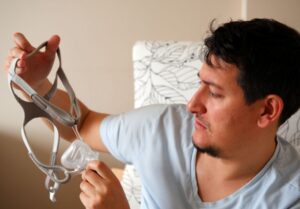
For individuals with obstructive sleep apnea, CPAP therapy is the most commonly prescribed treatment. It involves the use of a special machine that uses pressurized air to keep you breathing without interruption throughout the night. CPAP therapy works for many people, but it has some major drawbacks. And sometimes, it is simply not the best solution for a given situation! What are some signs that your CPAP is not working for you? This blog post explains.
Signs There Is a Problem with Your CPAP
A CPAP machine should help you breathe steadily, sleep more deeply, and wake up with increased energy. If you still feel worn out or notice new problems, your treatment may not be living up to its potential. Here are some signs to watch for:
- You still snore, gasp, or choke during sleep.
- You wake up with headaches, a dry mouth, or a sore throat.
- You feel tired, irritable, or foggy during the day.
- Your mask leaks air, makes noise, or shifts out of place.
- Your machine feels uncomfortable or seems to deliver too much or too little air.
- You take the mask off during the night without meaning to do so.
Sometimes, the machine itself is not the problem. For example, some patients just find that the CPAP is uncomfortable to wear even when it is operating perfectly. Or, changes in your skin or facial hair could affect the way your mask fits and negatively impact your treatment’s effectiveness.
What Can You Do?
If your CPAP is not delivering the results you expected, do not ignore the issue. A qualified medical professional can review your symptoms, examine your airway, and look at your machine data to see what may be wrong. Sometimes, the solution is simple. You might need a different mask style, a better mask fit, new tubing, a clean filter, or a pressure change.
However, CPAP therapy is not the right choice for everyone. Some patients try to use it faithfully but still struggle with discomfort, claustrophobia, leaks, noise, or poor results. For such individuals, an alternative treatment may make more sense. One option is Vivos DNA, a custom oral appliance system that can help address airway structure and support better nighttime breathing without a mask or hose. A sleep dentist or another qualified member of your care team can help you explore options until you find one that is viable for long-term management of your sleep apnea.
CPAP therapy can be effective, but it is not infallible! Monitor how your treatment is working and make adjustments as soon as they are needed.
Meet the Practice
At Exceptional Dentistry Pain & Sleep Solutions, our team is proud to provide Vivos DNA therapy. Dr. Sara Saba is a Vivos Integrated Provider (VIP) who specializes in this unique approach to sleep apnea treatment. If you are frustrated with your CPAP and wish to explore this innovative alternative, contact our office in Silver Spring, MD, at 301-460-3331.