
Children’s Airway Treatment – Aspen Hill, MD
Better Nights for Your Little One
It’s estimated that about 2-4% of children in the U.S. have some type of sleep-disordered breathing (SDB), and this includes sleep apnea. While sleep problems tend to make adults feel tired, with children, the opposite can be true. A lack of rest can make them hyperactive, which is why they are often misdiagnosed as having ADD/ADHD. If you know that your child snores, or if they are being treated for ADD/ADHD and it isn’t working, it may be time to schedule an appointment with Dr. Saba to learn more about children's airway treatment in Aspen Hill, MD.
Why Choose Exceptional Dentistry Pain & Sleep Solutions for Children’s Airway Treatment?
- Doctor With Years of Sleep Apnea Therapy Training
- Care Provided by a Fellow Mom
- Custom-Made Oral Appliance That Can Stop Sleep Apnea
What Is Childhood Sleep Apnea?
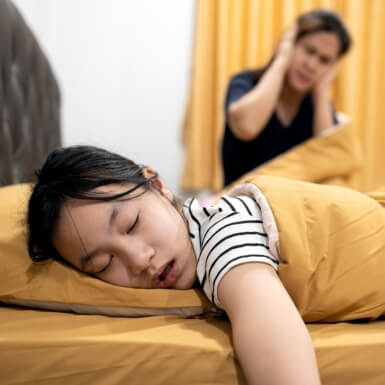
Children can develop sleep apnea due to all of the same reasons as adults, but the main culprit tends to be an underdeveloped or narrow upper airway. This means that one or both of their jaws may be growing too slowly, causing their breathing to become restricted while they sleep. It can also create dental issues like crowding and crookedness. Simply put, neither the teeth nor the air has enough room.
How Is Sleep Apnea Diagnosed in Children?

In order to move forward with sleep apnea treatment for your child, they must first receive a diagnosis. To do this, we will refer them for a sleep study. A sleep study is an overnight diagnostic test that will track your child’s vitals while they sleep. This includes their heart rate, respiratory interruptions, and oxygen levels. This information is then analyzed to confirm whether or not they have sleep apnea.
Risk Factors for Childhood Sleep Apnea
There are several common risk factors of childhood sleep apnea. Here are some of the most prominent ones:
- Large Tonsils/Adenoids: This is the most common reason for sleep apnea in kids. Tonsils and adenoids are both lymph nodes. The tonsils are found at the back of the throat and adenoids are higher up in the throat, behind the nose. Both of these grow during childhood, sometimes becoming large and causing blockages.
- Obesity: Children who are overweight are at higher risk of sleep apnea.
- Poor Muscle Tone: If your child has muscular dystrophy or cerebral palsy, they are more likely to have blockages during sleep.
- Genetic Syndromes: Congenital abnormalities, like Down Syndrome (Trisomy 21) and Prader-Willi Syndrome, increase children’s risk of sleep apnea.
How Early Sleep Apnea Treatment Can Benefit Your Child
Kids with sleep apnea experience a variety of negative symptoms, including struggling to concentrate, forgetting instructions easily, and difficulty sitting still. Since sleep apnea affects memory and attention, it can negatively impact how well they perform in an academic setting. By addressing the root cause of the issue, many parents see significant improvement in their child’s ability to succeed in the classroom.
VIVOS Appliance for Children
The VIVOS appliance is a small, custom mouthguard that a child wears to bed, and it applies slight pressure to their teeth. Over the course of a few months, their dental arches (the upper and lower rows of teeth) will be gently pushed out and expanded, opening up the airway. This will not only make more room for the incoming adult teeth, but it will also make breathing easier, particularly during sleep. The biggest benefit of the VIVOS appliance is that the results are permanent, so the impact it can have on a child’s long-term health is practically immeasurable.