
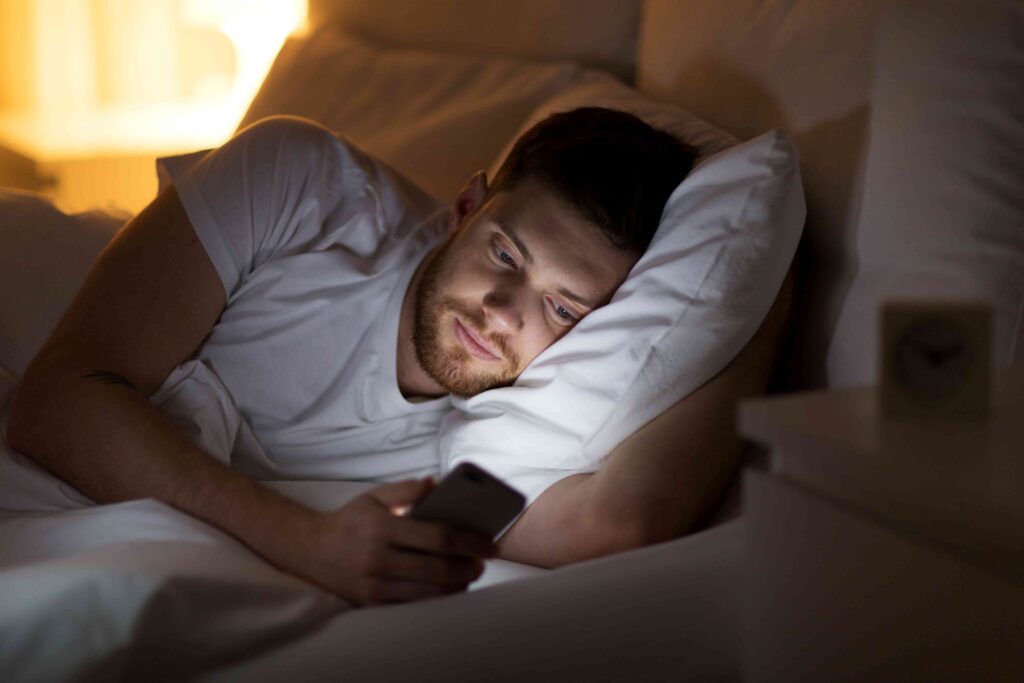
It can be difficult for anyone to get a quality night of sleep. This is made even more challenging for those who suffer from sleep apnea. By establishing a healthy, soothing bedtime routine, many people are able to achieve deeper sleep and wake up feeling well-rested. Part of this routine should include putting away your phone and other screens. Read on to learn more about phone use and how it can impact your sleep.
How Do Cell Phones Affect Your Sleep?
The problem with using phones and other electronic devices too close to bed is the blue light being emitted. Blue light comes off the screen of phones, tablets, and other devices. However, the main source of blue light is from the sun. When you are naturally exposed to blue light during daytime hours, your ability to produce melatonin is disrupted. This signals your brain to wake up and stay alert. This is great during the day, but this isn’t the case at night.
Because blue light disrupts your body’s ability to produce melatonin, it makes it difficult for you to fall asleep and stay asleep. For someone who has sleep apnea and is already struggling to fall asleep and stay asleep.
How to Minimize the Impact of Blue Light on Sleep
The easiest step to take is to turn off your devices at least an hour before bed. If you rely on your phone for your morning alarm, set this up ahead of time so you can spend some time without looking at your phone before bet. It can also be helpful to dim the light around your living space. Naturally, bright lights trick your brain into thinking it’s daytime.
Instead of watching videos or surfing the web before bed, try to read a book or magazines, listening to music or a podcast, writing, during a crossword, or another activity that doesn’t involve screens or bright lighting.
Get Treated for Sleep Apnea
Sleep apnea and poor-quality sleep can increase your risk of heart disease, depression, weight gain, high blood pressure, diabetes, and more. This is why reducing the effects of blue light in addition to seeking treatment for sleep apnea is so important.
In addition to setting up a calming bedtime routine with limited blue light, sleep apnea sufferers should seek professional help. If you haven’t had success with CPAP therapy in the past or fall into the mild to moderate sleep apnea category, you may be able to benefit from oral appliance treatment. This CPAP alternative works by shifting the position of your lower jaw to keep the airway open during sleep, reducing your risk of experiencing sleep apnea.
By putting down your phone and other devices before bed, as well as seeking treatment for sleep apnea, you can look forward to quality, restful sleep going forward.
About the Author
At Exceptional Dentistry, Dr. Sara Saba, Dr. Cyrus Allafi, and Dr. Sheetal Solanki work together to treat patients in the Silver Springs community. With their combined experience and expertise, patients can get pretty much anything they need under one roof. To learn more about sleep apnea or to schedule an appointment, visit their website or call (301) 460-3331.